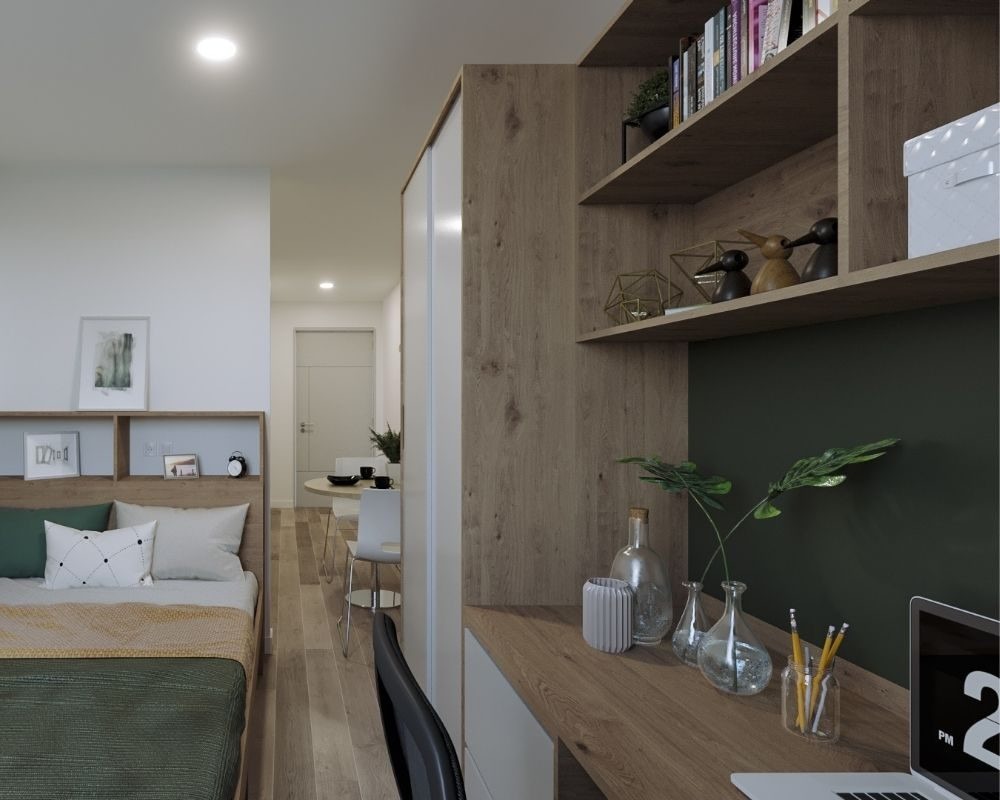
North Parade Road, Bath
£0 per week
Centurion House is a brand-new...

Search It - Compare It - Student It
Bath, city, unitary authority of Bath and North East Somerset, historic county of Somerset, southwestern England.
Bath lies astride the River Avon in a natural area of steep hills. It was built of local limestone and is one of the most elegant and architecturally distinguished cities. Its 16th-century abbey church of St. Peter and St. Paul is late Perpendicular Gothic and is noted for its windows, but it is the wealth of classical Georgian buildings mounting the steep valley sides that give Bath its distinction.
The city was designated a UNESCO World Heritage site in 1987.
The hot 46 °C mineral springs on the site attracted the Romans, who founded Bath as Aquae Sulis, dedicated to the goddess Sulis Minerva, an amalgamation of Celtic (Sul) and Roman (Minerva) deities. The Saxons built an abbey on the site where in 973 CE Edgar was crowned the first king of all England. The Normans subsequently rebuilt the church between 1088 and 1122, transferring there the diocese they had founded at Wells. The bishop’s throne returned to Wells in 1206, and there was a long rivalry between the canons of Wells and the monks of Bath, of which the bishop was titular abbot.
The good news is that Bath is a small city, with pretty much everything in walking distance. And, it’s been voted the second safest city in the whole world.
Known best for its rich history and Georgian architecture, Bath is considered to be one of the UK’s most attractive cities and was listed as a UNESCO World Heritage site in 1987
Bath is ranked as one of the top safest student cities in the UK by the Complete University Guide.
Accommodation currently available in Bath